
Simor Consulting
Category: Trends

The energy consumption numbers for training frontier AI models have crossed a threshold that makes them difficult to ignore. Training a single large language model now consumes between 50 and 100 giga

Data residency requirements are multiplying. In the past six months, nine countries have enacted or strengthened laws that restrict where certain categories of data can be stored and processed. Five m

Partnership announcements in AI have become a quarterly ritual. Two companies issue press releases about a strategic alliance, exchange compliments about each other's technology, and promise integrati
NVIDIA still dominates AI inference and training hardware, but the dominance is no longer absolute in the way it was 18 months ago. AMD has shipped competitive alternatives at lower price points. Inte

The benchmark results from the past quarter are hard to ignore. On tasks spanning legal document analysis, medical coding, financial risk assessment, and manufacturing quality inspection, vertical AI

A quiet but significant trend has emerged over the past two quarters: enterprises are moving AI workloads off managed services and back onto infrastructure they control. The pattern is not universal,

The acquisition wave in AI this quarter was not random. Five deals, each above the billion-dollar threshold, closed within weeks of each other, and they share a common logic: the companies being acqui

The framing of AI systems as either "copilots" (human-in-the-loop, AI assists) or "autopilots" (human-out-of-the-loop, AI acts independently) has dominated the conversation about AI autonomy for two y

The legal landscape for web scraping shifted twice this quarter, and the changes affect any organisation that scrapes web data for AI training, RAG pipelines, or market intelligence. First, a US fede

The market for AI engineers is the tightest it has been since the deep learning boom of 2017. Demand has grown 280% year-over-year for the "AI engineer" title, and the supply of experienced practition
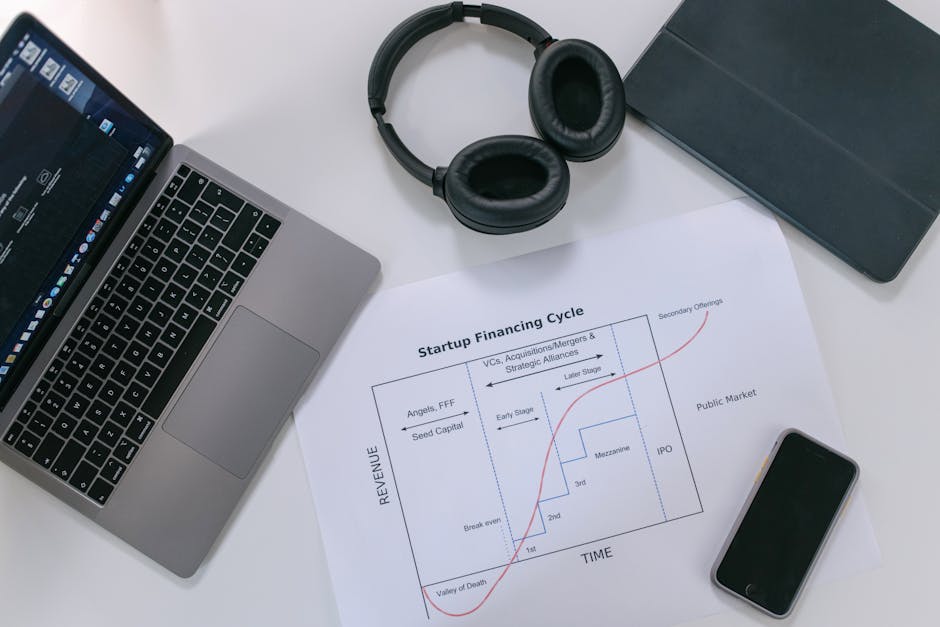
Five years ago, "data company" described a specific type of organisation: a business whose primary product was data or data services: Snowflake, Databricks, Palantir, Bloomberg. Today, the distinction

The regulatory landscape for AI safety has fractured along jurisdictional lines. The EU has taken a prescriptive, risk-based approach. The US has taken a sector-specific, agency-led approach. The UK h

The combined AI infrastructure capital expenditure of the four largest cloud providers exceeded $100 billion in the trailing twelve months. Microsoft, Google, Amazon, and Meta are building data centre

Agentic AI (systems where language models plan, execute multi-step tasks, and use tools autonomously) is the dominant topic at every AI conference, vendor pitch, and engineering blog. The hype is inte

The majority of enterprise AI strategies are built on an implicit assumption: that the organisation's data is ready to support AI workloads. The assumption is almost always wrong. Data that is adequat

Your team has a real use case. Maybe it is a support assistant that answers from your knowledge base, a contracts reviewer that applies your house clause library, or an ops copilot that understands yo
If you run a small business, you have heard the AI pitch a hundred times. Most of it is aimed at enterprises with data teams, seven-figure budgets, and a CIO to translate. That framing is now out of d

Retrieval-augmented generation is the default architecture for enterprise AI applications that need to ground model outputs in organisational data. The standard RAG pipeline ingests documents, chunks

France released a fully open-source large language model trained on curated French-language data. India announced a multilingual model covering 22 scheduled languages. The UAE expanded its Falcon mode

The traditional BI dashboard, a grid of charts that a business user opens every morning to check KPIs, is losing its grip on how organisations consume data. The decline is not dramatic. No one declare

LinkedIn's latest workforce report shows "AI engineer" as the fastest-growing job title for the third consecutive quarter. Job postings containing the title increased 280% year-over-year. The growth r

The regulatory focus on AI is narrowing from the models themselves to the data that trains them. The EU AI Act requires documentation of training data provenance and composition. The US Copyright Offi

OpenAI shipped GPT-5. Anthropic shipped Claude 4. Google shipped Gemini Ultra 2. Within six weeks of each other, the three leading model providers released frontier models that are, by most benchmarks

Enterprise AI spending increased roughly 300% year-over-year according to multiple industry surveys released this quarter. The headline number gets attention, but the breakdown is where the actionable

Data Council 2026 wrapped in Austin last week, and the signal-to-noise ratio was higher than in recent years. The conference has historically been the venue where data infrastructure practitioners (no

Google published the Agent-to-Agent (A2A) protocol specification in late 2025 and, as of this quarter, has secured endorsement from over fifty technology companies including Salesforce, SAP, ServiceNo

AWS announced Bedrock Studio. Google shipped Vertex AI Platform as a unified surface. Azure consolidated its AI offerings under a single "AI Foundry" brand. Databricks, Snowflake, and even Cloudflare

Three releases in the last six weeks have redrawn the open-source LLM map. Meta shipped Llama 4 with a mixture-of-experts architecture that narrows the gap with proprietary frontier models. Mistral re

The first enforcement window of the EU AI Act opened in February 2026, and the grace periods that protected early movers are expiring on a rolling schedule through 2027. This is no longer a policy dis

2025 was the year AI moved from experimentation to industrialisation. While 2024 saw the explosion of generative AI capabilities, 2025 was about making those capabilities production-ready, cost-effect