
Simor Consulting
Category: Thought Leadership

The typical approach to multi-agent AI systems is choreographed. A central orchestrator assigns tasks, sequences handoffs, and controls the flow. Agent A finishes, passes to Agent B, which passes to A

When organisations adopt AI, they plan for the first-order effects: new tools, new skills, new models. They almost never plan for the second-order effects: how AI reshapes the relationships between pe

Partnership announcements in AI have become a quarterly ritual. Two companies issue press releases about a strategic alliance, exchange compliments about each other's technology, and promise integrati

"Move fast and break things" was a product development philosophy. It was never an engineering philosophy, and it was certainly never a data philosophy. But somewhere along the way, it became the defa
Manufacturing figured out quality control decades ago. AI is still learning the lesson the hard way. When a car leaves the factory with a defect, the manufacturer does not shrug and say "models are p
Every AI demo is impressive. Every AI production system is a maintenance burden. The distance between those two statements is where most AI initiatives quietly fail. The demo shows a model producing

Most AI strategies are Gantt charts with aspirations. They list phases, milestones, tool selections, and target dates. They answer "what" and "when." They almost never answer "why" in a way that anyon

Every few months, someone declares that a new tool has made data engineering obsolete. First it was managed warehouses. Then dbt. Then generative AI that writes SQL. Each time, the prediction is the s
Predictions about technology roles are usually wrong in predictable ways. They overestimate the speed of change, underestimate the persistence of legacy systems, and assume that technical trends will

The framing of AI systems as either "copilots" (human-in-the-loop, AI assists) or "autopilots" (human-out-of-the-loop, AI acts independently) has dominated the conversation about AI autonomy for two y

Commercial aviation has a fatality rate of roughly 0.07 deaths per billion passenger miles. This is not an accident of technology. It is the result of a safety culture that was built, over decades, fr

Every AI team I have worked with has a graveyard of projects that should have been killed early but were not. A chatbot that no one uses. A recommendation engine that does not outperform a simple heur

The market for AI engineers is the tightest it has been since the deep learning boom of 2017. Demand has grown 280% year-over-year for the "AI engineer" title, and the supply of experienced practition
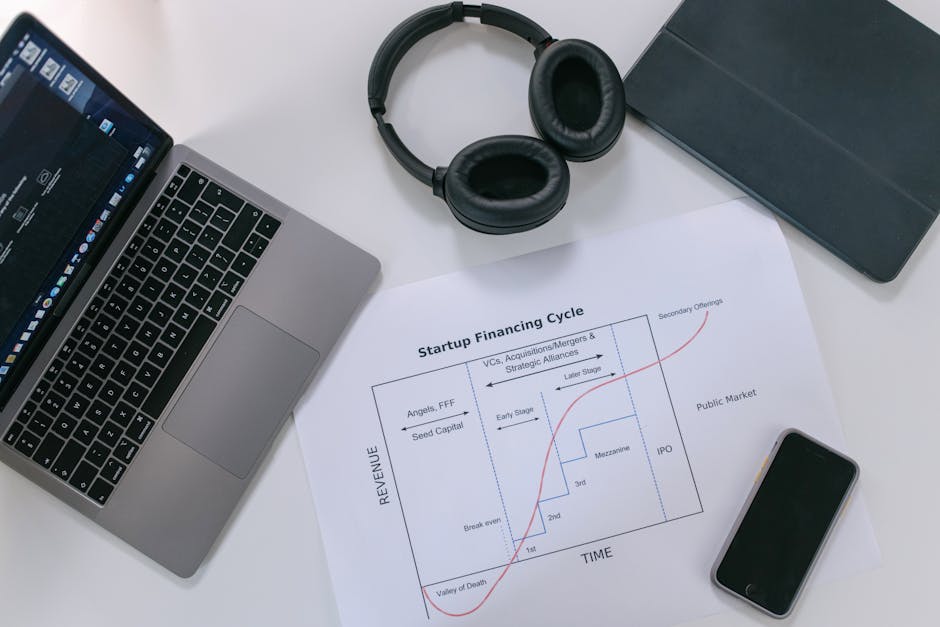
Five years ago, "data company" described a specific type of organisation: a business whose primary product was data or data services: Snowflake, Databricks, Palantir, Bloomberg. Today, the distinction
A pharmaceutical company I consulted for was three months into a project to fine-tune a large language model on their internal research corpus. The project had a team of four engineers, a budget of $8

The headline numbers are familiar. Women represent roughly a quarter of AI and data science professionals globally. At senior levels, the proportion drops to the low teens. At the C-suite level of AI-
The Pont du Gard in southern France has carried water across the Gardon river valley for two thousand years. It was built without steel reinforcement, without concrete, and without computer-aided stru

Google's 2015 paper "Hidden Technical Debt in Machine Learning Systems" described a problem that has only gotten worse in the decade since. The paper's central observation was that the model itself is
There is a version of the data engineering career that nobody warns you about. It is not the startup grind or the big-company bureaucracy. It is being the only data engineer on a team of people who do

In 2023, I rewrote a data pipeline three times because the framework landscape kept shifting. First it was built on LangChain. Then the team wanted to switch to LlamaIndex because it handled retrieval

A critical open-source library used by thousands of companies, including several Fortune 500 firms, is maintained by one person in their spare time. This is not a hypothetical. It is a description of

LinkedIn's latest workforce report shows "AI engineer" as the fastest-growing job title for the third consecutive quarter. Job postings containing the title increased 280% year-over-year. The growth r
A Fortune 500 company hired a team of twelve machine learning engineers and tasked them with building a predictive maintenance system for their manufacturing floor. The ML team spent four months evalu

Most reading lists for AI leaders are assembled by people who sell AI. The lists are full of books about machine learning techniques, deep learning architectures, and the latest framework documentatio

Three years ago, "data engineer" was a coherent job title. You built pipelines, managed infrastructure, and moved data from where it was to where it needed to be. The role required SQL, Python, and a
A data engineering team I worked with had adopted six AI-powered tools in twelve months. An automated code reviewer, a data quality scanner, a pipeline orchestrator with intelligent retry, a natural l

OpenAI shipped GPT-5. Anthropic shipped Claude 4. Google shipped Gemini Ultra 2. Within six weeks of each other, the three leading model providers released frontier models that are, by most benchmarks

A hiring manager at a large tech company told me they had four hundred engineers working on their AI platform and zero people with training in philosophy, ethics, or the social sciences. When I asked

The legal system has not caught up with the practice of training AI models on copyrighted data, and the people building AI systems are not waiting for it. Models trained on books, articles, code repos

The phrase "data-driven culture" has been emptied of meaning by overuse. It appears in every strategy deck, every job posting, every conference talk. Everyone claims to want it. Almost no one can desc
In 2009, deploying software to production was an event. It involved a change request, a maintenance window, a runbook, and a prayer. Developers wrote code, then threw it over the wall to operations, w

I was in a strategy session where a VP of Data told the room that generative AI would "eliminate the need for data analysts within two years." The room nodded. Budget was reallocated. Three analyst po

The CTO of a mid-size financial services firm told me they had spent $4 million on AI tooling in eighteen months. They had three large language model providers under contract, a vector database cluste

A technology company built an impressive AI platform. They had GPU clusters, fine-tuning pipelines, evaluation frameworks, and a growing model registry. They opened access to any team that wanted to u
A financial services firm spent eight months building an AI-powered document analysis system. When it came time to deploy, they discovered their retrieval system had no governance layer, their agent h

2025 was the year AI moved from experimentation to industrialisation. While 2024 saw the explosion of generative AI capabilities, 2025 was about making those capabilities production-ready, cost-effect