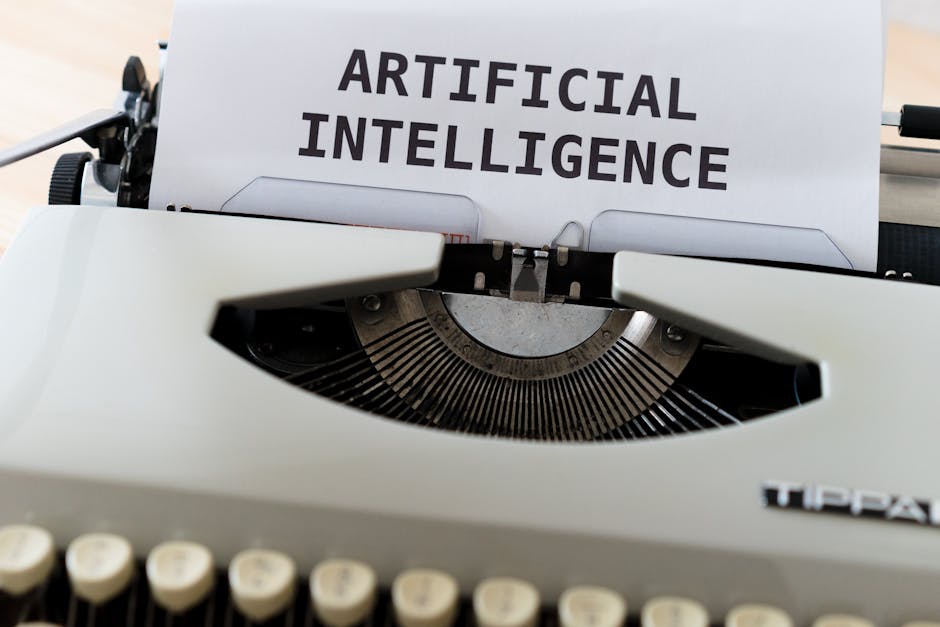

2025 was the year AI moved from experimentation to industrialisation. While 2024 saw the explosion of generative AI capabilities, 2025 was about making those capabilities production-ready, cost-effective, and trustworthy.
Key Trends of 2025
RAG as Default Architecture
The debate about whether to use RAG ended. RAG became the default architecture for enterprise AI applications. The question shifted from “Should we use RAG?” to “How do we optimise our RAG pipeline?”
Key developments:
- Vector databases matured: 10x performance improvement, 80% cost reduction
- Hybrid search became standard: combining semantic and keyword search
- Streaming RAG emerged: real-time document ingestion
- Multi-modal RAG arrived: searching across text, images, and structured data
The Semantic Layer Revolution
What started as a way to standardise metrics became a fundamental reimagining of how organisations interact with data:
This diagram requires JavaScript.
Enable JavaScript in your browser to use this feature.
Organisations with semantic layers reported:
- 75% reduction in metric discrepancies
- 60% faster analytics development
- 90% improvement in business user satisfaction
Parameter-Efficient Fine-Tuning Breakthrough
Fine-tuning LLMs became accessible to everyone. With LoRA and QLoRA, teams adapted 70B+ parameter models on consumer GPUs:
- Cost reduction: From $50K to $500 for fine-tuning
- Time reduction: From weeks to hours
- Quality: Task-specific models outperforming general ones
- Deployment: 200MB adapters instead of 280GB models
Event-Driven Becomes Default
By mid-2025, new applications were event-driven by default:
- Sub-second data pipelines became standard
- Batch processing relegated to historical analysis
- Event mesh connecting everything
- Pay-per-event making real-time affordable
Unexpected Trends
The Great Consolidation
After years of tool explosion, 2025 saw significant consolidation:
- Lakehouse providers added streaming; streaming platforms added storage
- AI platforms unified: training, serving, and monitoring
- Observability merged: data, ML, and application observability unified
Privacy-First Architecture Movement
GDPR was just the beginning. Privacy became a primary architectural concern:
- Federated learning went mainstream
- Differential privacy built into platforms by default
- Synthetic data explosion
- Homomorphic encryption became feasible
AI Governance Platforms
As AI failures made headlines, governance platforms emerged as a new category:
- Automated bias detection
- Explainability as a service
- Compliance automation
- Immutable AI audit trails
Technical Breakthroughs
Quantisation Without Quality Loss
4-bit quantisation while maintaining quality changed AI economics:
- Models 8x smaller with <1% accuracy loss
- Edge deployment of 70B parameter models
- Real-time inference on commodity hardware
Semantic Caching
Caching based on meaning rather than exact matches:
- 90% cache hit rates for conversational AI
- Cross-language caching
- Intent-based retrieval
Continuous Learning Systems
Models that update in real-time without full retraining:
- Adaptation to drift within hours, not months
- Personalisation without privacy violations
- Efficient catastrophic forgetting prevention
2026 Predictions
The Autonomous AI Agents Era
2026 will be the year of AI agents:
- Self-improving systems: Agents that identify and fix their own errors
- Multi-agent orchestration: Teams of specialised agents collaborating
- Goal-oriented automation: Specify objectives, not procedures
- Human-agent partnerships: Augmentation reaching new levels
The Quantum-Classical Hybrid Year
Quantum computing will start solving real problems:
- Optimisation problems: Supply chain and routing at quantum speed
- Drug discovery: Molecular simulation breakthroughs
- Cryptography evolution: Post-quantum security becoming urgent
- Hybrid algorithms: Classical AI with quantum acceleration
The Sustainable AI Movement
Environmental concerns will drive architecture:
- Carbon-aware computing: Workloads following renewable energy
- Efficient architectures: 10x improvements in compute per watt
- Federated by default: Compute where data lives
- Green AI certifications: Sustainability metrics for models
The Decentralised Data Mesh Maturity
Data mesh will evolve from concept to reality:
- Self-serve platforms: Domain teams fully autonomous
- Federated governance: Automated policy enforcement
- Computational contracts: SLAs encoded in smart contracts
- Cross-mesh discovery: Finding data across organisations
This diagram requires JavaScript.
Enable JavaScript in your browser to use this feature.
Emerging Technologies
Neuromorphic Computing: Brain-inspired architectures for ultra-low power AI
Photonic Processing: Light-based computation for massive parallelism
DNA Storage: Archival storage with incredible density
Swarm Intelligence: Distributed decision-making systems
Challenges Ahead
The Complexity Crisis
- Debugging autonomous systems
- Explaining emergent behaviours
- Managing cascading failures
- Maintaining human oversight
The Skills Gap
- Universities teaching outdated concepts
- Professionals struggling to keep up
- Widening gap between leaders and laggards
The Regulation Lag
- AI regulations still being written
- Cross-border data governance complexity
- Liability for autonomous decisions
The Security Challenges
- Adversarial attacks on AI systems
- Data poisoning at scale
- Privacy attacks on federated learning
- Quantum threats to encryption
Decision Rules for 2026
Invest in foundations:
- Data quality remains the most important factor
- Platform thinking: build capabilities, not point solutions
- Continuous learning: for systems and people
- Governance first: build trust from the start
Embrace experimentation:
- Fail fast: quick experiments, quick learning
- Pilot programs: test new technologies safely
- Innovation labs: dedicated spaces for exploration
Focus on value:
- Business outcomes: technology serves business needs
- Measurable impact: define success metrics upfront
- User experience: adoption drives value
Build adaptive organisations:
- Cross-functional teams: break down silos
- Continuous education: learning as a core value
- Flexible architectures: design for change