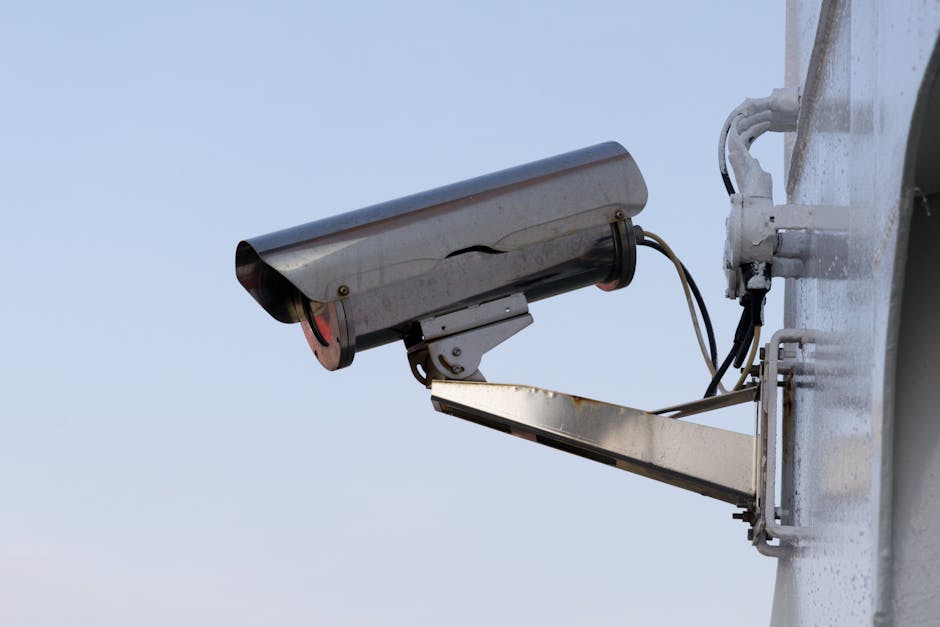
A security camera does not stop crimes. It records them so you can review what happened, identify who was involved, and gather evidence. After the fact, the footage becomes valuable for understanding patterns, attributing failures, and improving controls. The camera is not protection; it is visibility. It creates a record that exists before the incident and is available after it. Without the camera, you have only testimony and guesswork. With it, you have facts.
AI audit works the same way. Audit logs record inputs, outputs, and decisions so that when something goes wrong, or when you need to understand patterns over time, you have something to review. The audit does not make the AI behave better in the moment. It makes behaviour visible for later analysis. The behaviour is still the model’s; the audit is only the record of it.
What Audit Records
Effective AI audit captures what the model saw (inputs), what it produced (outputs), and enough context to understand the decision (timestamps, user identity, retrieval results, confidence scores where available). The goal is sufficient information to reconstruct what happened and why, not to log everything indiscriminately. A log that captures everything is a log that buries the important data in noise.
Logging too little defeats the purpose. If you capture only the final output, you cannot determine whether the error originated in the input, the retrieval, the generation, or the post-processing. You know the output was wrong; you do not know why. Logging too much creates noise and storage costs without improving investigability. The right scope depends on your risk profile and regulatory environment.
Input capture means recording the full prompt or input that reached the model. This includes the user query, the system instructions (or a reference to them), and any retrieved context that was included. For retrieval-augmented systems, capturing the retrieval results is essential because failures often originate there. A query that retrieves the wrong documents will produce a wrong answer regardless of how good the model is.
Output capture means recording the model’s response. For generative tasks, this is straightforward. For classification or extraction tasks, recording the raw output before any post-processing or transformation is important, because post-processing bugs can introduce errors that obscure the original model behaviour. If you only log the post-processed output, you cannot determine whether an error came from the model or from the processing that followed it.
Metadata makes the logs actionable. Timestamps enable correlation with other system events. User identity enables user-specific analysis. Session or conversation identifiers enable tracking across multi-turn interactions. Model version identifiers are critical for debugging: if the model behaviour changed after a deployment, you need to know which version was running when. Without version metadata, you cannot attribute behavioural changes to model updates.
The Post-Incident Use Case
Audit shines when something goes wrong and you need to understand why. Which inputs triggered the problematic output? Was the failure in retrieval, in generation, in formatting? Without logs, you are guessing. With logs, you are investigating. The difference is the difference between hoping you fix the problem and knowing you fixed it.
Consider a case where a customer received an incorrect refund amount. With audit logs, you can reconstruct the exact inputs that produced the refund calculation: the original transaction, the retrieval results that provided policy context, the model’s interpretation of the policy, the post-processing that converted the interpretation to a number. You can identify where the error occurred and whether it was a retrieval failure, a model error, or a processing bug. You can verify that the fix actually fixed the problem.
Without audit logs, you know only that the wrong amount was issued. You cannot determine why. You cannot verify that a fix works. You can only react to each incident as it surfaces, always one step behind. The pattern of errors remains invisible because you cannot see the inputs that produced them.
Audit also supports continuous improvement: pattern analysis of failures, monitoring for drift, measuring whether changes to prompting or retrieval actually improve outputs over time. You can establish baselines before changes and compare performance after. You can identify which input patterns produce errors and target improvements at those patterns specifically.
What to Capture
Beyond the core inputs and outputs, consider capturing intermediate steps in complex pipelines. If your system retrieves documents, generates a draft, reviews the draft, and produces a final output, each stage should be logged. This enables you to attribute failures to specific stages rather than guessing. A failure in the final output might originate in an earlier stage; without logs from that stage, you cannot find the root cause.
Confidence scores and alternative candidates are valuable when available. If the model generated multiple possible outputs and selected one, knowing what alternatives were considered helps you understand whether the right choice was made. If the top-scored output was wrong but a lower-scored output would have been correct, you have information about model calibration. This helps you decide whether to adjust thresholds, fine-tune, or switch models.
Environment context helps too. What model version was used? What time of day? What load was the system under? These factors can influence behaviour in ways that are not obvious until you have enough data to correlate. A model that behaves correctly at low load might behave differently at high load. A model that works well in the morning might drift by evening. Correlating environment factors with behaviour reveals patterns you would not otherwise see.
The Retention Problem
Audit logs accumulate. A system processing thousands of queries per day generates substantial log volume. Storing everything forever is expensive. Storing nothing defeats the purpose. The cost of storage grows linearly with log volume. The value of logs may not grow proportionally, especially if most logs are from routine queries where nothing went wrong.
Retention policy should be risk-based. High-stakes outputs warrant longer retention. A system that approves loans generates more valuable audit logs than a system that answers FAQs. The retention period should reflect the consequence of the decisions and the likelihood that questions will arise about them. Regulatory requirements may mandate specific retention periods for specific output types.
Aggregation can reduce storage costs while preserving analytical value. Instead of retaining every individual log, you might retain summaries, anomaly reports, or sampled examples. You lose the ability to investigate specific incidents but retain the ability to detect patterns. This trade-off is acceptable for low-stakes systems. It is dangerous for high-stakes systems where specific incidents matter.
Compressed retention is a middle path. Keep full logs for a period sufficient to detect patterns and investigate incidents. After that period, compress or aggregate the logs while preserving enough detail for aggregate analysis. This balances storage costs against analytical value. You can still detect trends and patterns after compression; you just cannot investigate specific incidents that occurred months ago.
Who Reviews
Audit is only valuable if someone looks at the logs. A system that records everything but is never reviewed is security theatre. The record exists; the value does not. The investment in logging infrastructure produces nothing if there is no review process.
The review process might be reactive (investigating a reported issue) or proactive (periodic review of sampled outputs for quality or compliance). Reactive review is easier to justify operationally. You spend resources when there is a problem. Proactive review requires ongoing commitment and may be deprioritised when resources are tight. But reactive review catches only known problems; proactive review catches problems before users report them.
The review capability must be built in. If logs are stored in a system that nobody knows how to query, they are not actionable. Teams often underestimate the investment in review tooling and process. Building a logging system is easy. Building a logging system with usable query interfaces, automated alerts, and review workflows is hard.
Alerting helps focus review. If logs are continuously monitored for anomalies and alerts fire when anomalies are detected, review happens reactively to alerts rather than proactively on all logs. This is more efficient but requires defining what anomalies look like. An anomaly definition that is too broad generates too many alerts; reviewers ignore them. An anomaly definition that is too narrow misses real problems.
Decision Rules
Implement AI audit when:
- Your system makes consequential decisions (approvals, classifications, content generation)
- Regulatory or contractual requirements mandate visibility into AI decisions
- You need to debug failures that occur in production
- You want to measure and improve quality over time
Design audit to capture:
- Full inputs (query, context, retrieval results)
- Full outputs (raw model response before post-processing)
- Metadata (timestamps, user identity, session, model version)
- Intermediate steps in complex pipelines
- Confidence scores and alternatives when available
- Environment context (model version, load, time)
Do not implement audit when:
- Systems are experimental with low consequence for failure
- Latency and storage costs outweigh the value of visibility
- You cannot yet define what you would do with audit data
- You have no plan for reviewing the logs
The camera that records everything but is never reviewed is theatre. Audit is only worth the cost if it serves a defined review process. Know what you will look for and how you will act on what you find.